 Day Tours from Tokyo
Best Time to See Mt Fuji: A Season and Hour Guide
The best time to see Mt Fuji is a winter morning, when the mountain is visible on roughly 60 to 70 percent of days at Kawaguchiko against 20 to 30 percent in summer, and the air is clearest before the day's cloud builds. This guide gives the month-by-month odds, the snowcap dates, the cherry blossom and autumn leaf windows at Chureito Pagoda and Lake Kawaguchi, and what your options are on the day the mountain hides. It sits alongside the other day trips from Tokyo if Mt Fuji turns out to be a no-show. The bookable tours are compared on day trips from Tokyo.
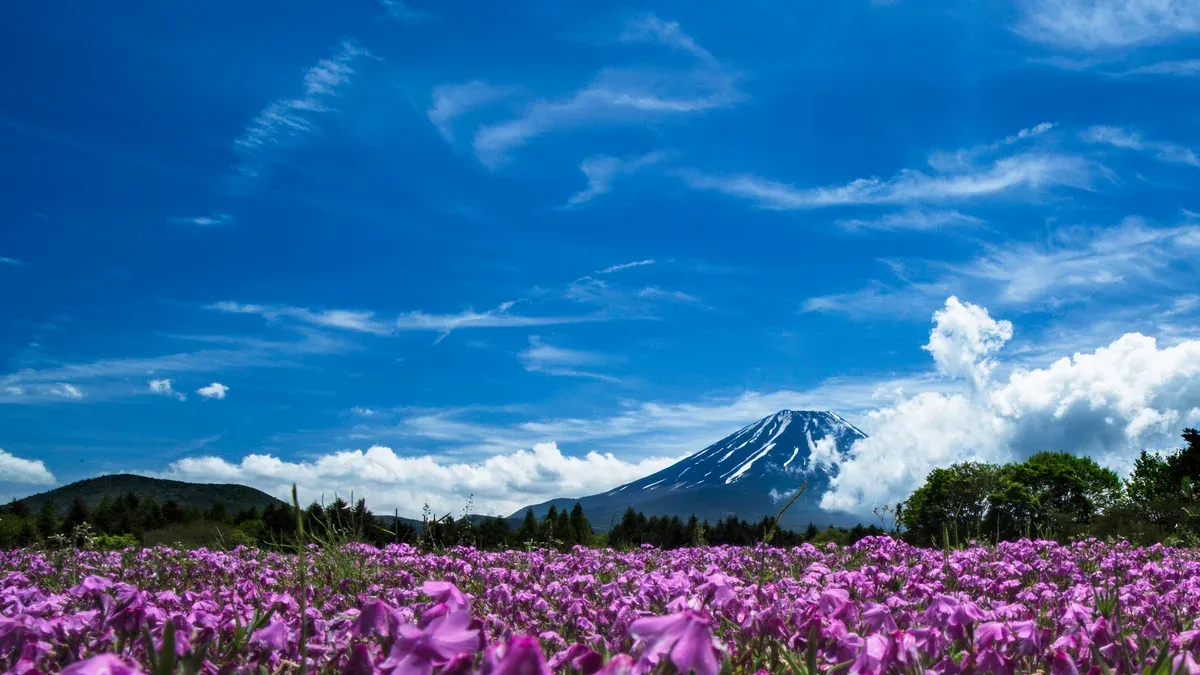
Mt Fuji stands mostly clear of snow above a field of pink flowers. Photo: Kumiko Nakashima, CC BY-SA 3.0, via Wikimedia Commons
Quick answer Winter mornings, first
The best time to see Mt Fuji is on a winter morning, from sunrise to about 8:30, when the mountain shows on roughly 60 to 70 percent of days at Kawaguchiko and cloud has not yet built. Summer is the weakest window, with visibility on only 20 to 30 percent of days and the whole mountain showing about 7 percent of the time in June. From central Tokyo the mountain is visible on more than 120 days a year.
Key takeaways
- December to February mornings carry the best odds: 60 to 70 percent visibility at Kawaguchiko, against 20 to 30 percent in summer.
- June is the worst month, with the whole mountain visible on only about 7 percent of days.
- Cherry blossoms frame the peak at Chureito Pagoda around 10 to 18 April, and the Kawaguchiko autumn leaves window runs 13 to 21 November.
- If the mountain hides, a Fuji day tour still covers Oshino Hakkai, the lake and the pagoda, and every tour on this site allows free cancellation 24 hours ahead.
Mt Fuji Visibility by Month
No official body publishes a monthly visibility table. The figures below come from a tourism data roundup on Kawaguchiko conditions and the qualitative guidance on Japan Guide, and they describe odds, not promises.
The Month-by-Month Picture
Two numbers anchor the table. At Kawaguchiko, the mountain is visible on about 60 to 70 percent of winter days but only 20 to 30 percent of summer days. June is the low point, with the whole mountain showing on only about 7 percent of days. June is also when the rainy season hits most of Japan. Japan Guide adds the wider pattern: views are better in the early morning or late afternoon, and in the colder months than in summer.
The snowcap column works differently. The Kofu Local Meteorological Observatory has recorded the first snowcap since 1894, and the average date is about 2 October. One recent season brought the announcement on 23 October, 21 days later than average, and another saw 7 November, the latest since records began. So in early autumn a bare peak is normal, not a sign you picked badly.
| Months | Visibility | Snow cap | Notes |
|---|---|---|---|
| December to February | Best odds, about 60 to 70 percent of days at Kawaguchiko | Snowcap season | Coldest, clearest air. Early morning is the prime slot. |
| March to May | Exact odds not stated | Not stated | Blossom at Chureito around 10 to 18 April frames the peak. |
| June | Worst month, whole mountain on about 7 percent of days | No cap | Rainy season. Plan for the lakes as well as the summit view. |
| July to August | About 20 to 30 percent of days | No cap | Climbing season runs 1 July to 10 September with a 4,000 yen fee. |
| September | Exact odds not stated | No cap | Typhoon season peaks in August and September. Flexibility matters. |
| October | Exact odds not stated | First snowcap averages about 2 October, but recent years slid to late October or 7 November | Diamond Fuji season at Lake Yamanaka starts mid-October. |
| November | Exact odds not stated | Not stated | Autumn leaves at Lake Kawaguchi peak around 13 to 21 November. |
| Year round | Over 120 visible days a year from central Tokyo | Not stated | Hakone has lower odds than the Fuji Five Lakes because sky must clear in both places at once. |
Can You See Mt Fuji in October
Yes, but treat it as a shoulder month. Autumn air is cleaner than summer air and October opens the Diamond Fuji season at Lake Yamanaka, where the setting sun sits on the summit from mid-October to late February. The honest catch is the snowcap: the average first date is about 2 October, yet one season saw it announced 21 days late and another on 7 November, so a brown peak in early October is common.
If the cap matters to you, aim for November onward. If the photo with blossoms-to-peak contrast matters, October mornings still deliver clean air more often than summer.
Sources: Fujikyu highway buses, Odakyu passes
Morning, Midday or Sunset
Japan Guide and a tourism data roundup agree on the clock: the mountain is most often clear early, and cloud builds through the day.
Why Early Morning Wins
The window from sunrise to about 8:30 gives the best chance of a clear view, because cloud builds through the day over and around the peak. Japan Guide says the same in broader terms: views are better in the early morning or late afternoon, and the colder months beat summer.
Practical booking follows from this. Coach day tours from Tokyo leave in the morning. The Mt Fuji, Chureito Pagoda, Lake Kawaguchi and Oshino Hakkai day tour runs 10 hours for $82 and departs Tokyo Station at 8:00 AM or Shinjuku Station at 8:30 AM, depending on the option. Independent travellers can do the same: the Fuji Excursion limited express runs direct from Shinjuku to Kawaguchiko, and the guide to Tokyo to Mt Fuji by train covers the tickets. A late afternoon look is the fallback. Diamond Fuji can be seen at Lake Yamanaka from mid-October to late February.
Mt. Fuji Comprehensive Travel Guide: When to Go, Where to See, How to Plan
When Fuji shows best and where to stand for it. Third-party video by HIRO's Geographic Japan. This site did not shoot it and has no relationship with the creator.
Cherry Blossoms, Autumn Leaves and Snow
Two short windows each year put a seasonal frame around the peak, and both have named dates and places.
Cherry Blossoms at Chureito and Lake Kawaguchi
Chureito Pagoda has about 650 Somei-Yoshino cherry trees, and peak bloom usually falls between 10 and 18 April. The pagoda is free, sits nearly 400 steps above Arakurayama Sengen Shrine, and rewards the climb with the pagoda, the trees and the peak in one frame when the sky plays along. Plan 30 to 45 minutes there, more in peak seasons when a queue forms at the viewing deck.
At Lake Kawaguchi, about 200 Somei-Yoshino trees line 1 km of the north shore, and the Fuji Kawaguchiko Cherry Blossom Festival ran 28 March to 15 April in its recent edition, with lakeside trees lit until 9 p.m. One note for planners: Fujiyoshida announced there would be no cherry blossom festival at Arakurayama Sengen Park because of overtourism, so expect crowds rather than stalls at Chureito itself.
Autumn Leaves and the Momiji Corridor
The Fujikawaguchiko Autumn Leaves Festival runs 7 to 29 November, with the maple corridor along the lake lit from sunset to 10 p.m. The Momiji Corridor is forecast to peak around 16 November, with the best window 13 to 21 November, and it is free to enter. Pair the colours with a morning view. The red Omni bus loop and the green Saiko line, running every 15 and 30 minutes respectively, link the viewpoints from Kawaguchiko Station.
Autumn also has a second show. Diamond Fuji can be seen at Lake Yamanaka from mid-October to late February, and Diamond Fuji Weeks run 1 to 22 February.
The Snowcap Months
The average first snowcap date is about 2 October by the Kofu observatory's records, which go back to 1894, but recent seasons have slipped to as late as 7 November. In practice, if the white cap matters, plan for November or later, since even the latest recorded first cap came on 7 November. Winter also brings the best visibility odds of the year.
Whether snow and blossom overlap at Chureito in April is not something the sources promise, so treat it as a gamble. The full round of viewpoints, buses and the 5th Station sits in the Mt Fuji day trip guide.
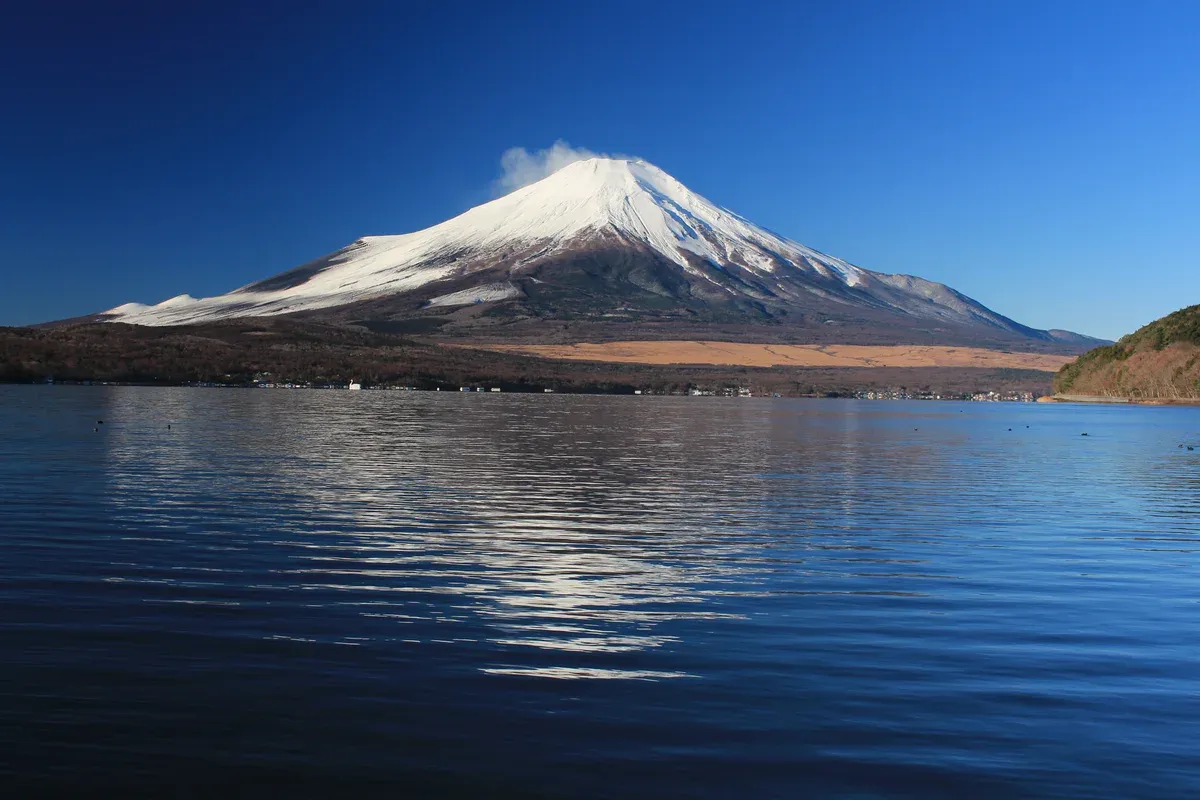
Mt Fuji and its snow cap are reflected in Lake Yamanaka. Photo: Alpsdake, CC BY-SA 4.0, via Wikimedia Commons
If Fuji Hides on Your Day
The listings say it plainly: views of Mt Fuji are not guaranteed, and even private tours note the mountain can be hidden.
What the Tours Say
None of the Fuji tours on this site promises a view. The listing for the Mt Fuji Full-Day Private Customizable Tour with Hotel Pickup states outright that Mt Fuji can be hidden, at $367 for a private group of up to 6. The shared coaches work the same way. The Mount Fuji Full-Day Highlights day trip costs $80 and includes entry fees at every stop, while the small group Mt Fuji and Lake Kawaguchi tour runs $149 for up to 15 people.
What you are buying is the day out: the pagoda, the lake, the villages and a chance at the peak, not a guaranteed photo.
What Is Worth Seeing Anyway
The Chureito Pagoda day tour covers Oshino Hakkai alongside Chureito and Oishi Park. At Lake Kawaguchi itself, the Panoramic Ropeway costs 1,000 yen round trip or 600 yen one way and departs every 5 to 10 minutes, running 8:30 to 17:00, or until 18:00 in the height of summer. The lake cruise costs 1,000 yen for adults and 500 yen for children, takes 20 minutes and sails every 30 minutes.
On a cloudy day the red loop bus runs every 15 minutes from Kawaguchiko Station.
Rebooking Around the Weather
Every tour compared on this site, from the $54 eight-stop bus to the private vehicle tours, carries free cancellation up to 24 hours before departure. That is your lever. Check the sky forecast the evening before, cancel inside the window if the ceiling is low, and rebook for a clearer morning.
If the whole Fuji plan collapses, the same 24-hour rule applies across the site's other day tours from Tokyo, so a Hakone or Kamakura coach can take the slot instead.
Mt Fuji Visibility FAQ
What are the best months to visit Mount Fuji for the view?
December through February give the best odds, with the mountain visible on about 60 to 70 percent of days at Kawaguchiko against 20 to 30 percent in summer. For the postcard combination, mid-November adds the Momiji Corridor's 13 to 21 November peak.
What are the odds of seeing Mount Fuji?
From central Tokyo the mountain shows on more than 120 days a year, and at Kawaguchiko the odds run from about 60 to 70 percent of winter days down to roughly 7 percent of June days for the whole peak. Time of day matters too, and sunrise to about 8:30 is the prime window.
Which town has the best view of Mount Fuji?
The Fuji Five Lakes area has better odds than Hakone, because Hakone needs clear sky in two places at once, and Kawaguchiko has several viewpoints: the north shore blossom line, the free Momiji Corridor and the 1,000 yen round trip Panoramic Ropeway. The Kawaguchiko day trip guide covers the logistics.
In which month is Mount Fuji visible with snow?
The average first snowcap date is about 2 October, but one recent season slid to 23 October and another to 7 November, the latest since records began in 1894. For a white peak, aim for November or later.
Can you see Mt Fuji in October?
Yes, October mornings are cleaner than summer and the Diamond Fuji season at Lake Yamanaka opens mid-October, but the cap is often still missing, with the average first snow about 2 October and recent announcements running weeks late. A morning departure is the way to play the month.
Is it worth booking a Mt Fuji tour if the forecast is cloudy?
Book, then use the 24-hour free cancellation every listing on this site offers: check the evening before, cancel if the ceiling is low, and rebook or switch to another trip. The Chureito, Lake Kawaguchi and Oshino Hakkai tour at $82 is still a full day of pagoda, lake and village stops when the peak itself stays hidden.