 Day Tours from Tokyo
2 Day Trip from Tokyo
A 2 day trip from Tokyo is the easiest way to see Hakone, the Fuji Five Lakes or Nikko without rushing. This guide compares the three overnight routes side by side, walks through the Hakone loop hour by hour, and shows what a second day actually buys you. If one long day is enough, the one-day tours on day trips from Tokyo are simpler.
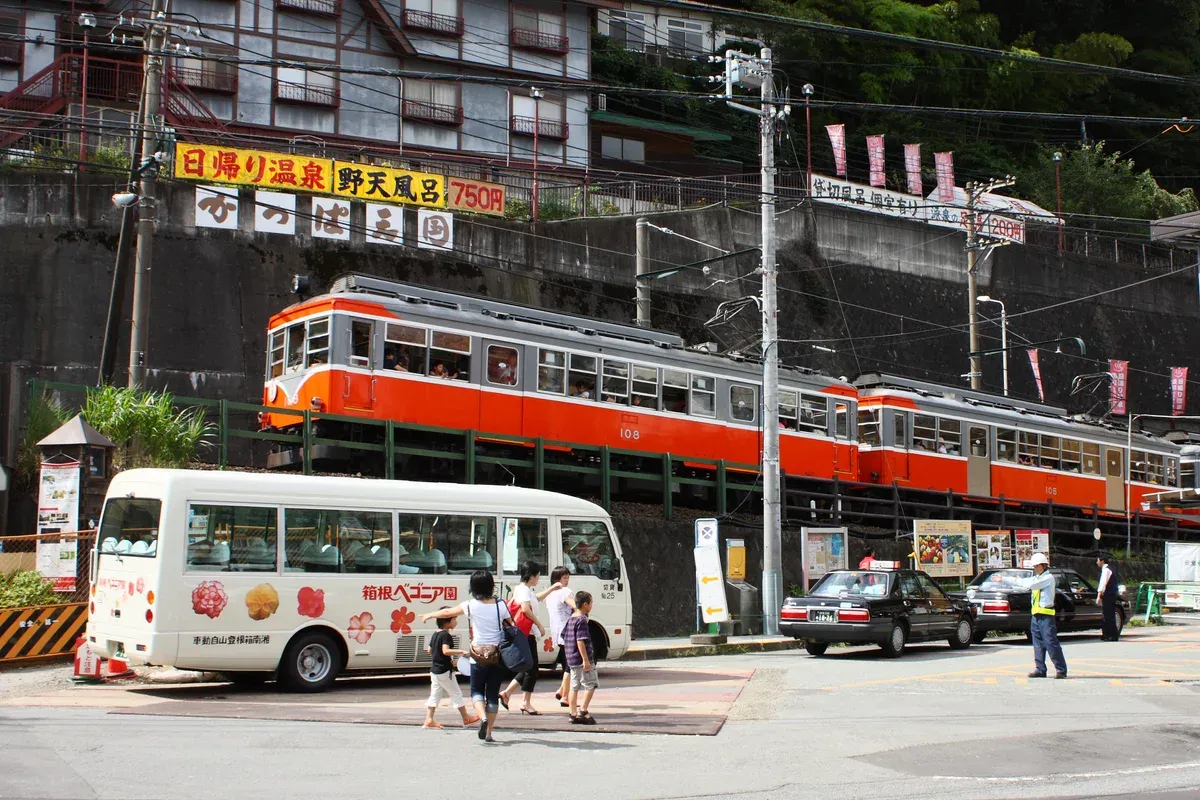
A Hakone Tozan Railway train waits above the road at Hakone-Yumoto. Photo: Yoshizumi Endo, CC BY-SA 2.0, via Wikimedia Commons
Quick answer Best overnight trips from Tokyo
The best 2 day trip from Tokyo is Hakone on the 2-day Hakone Freepass, which costs 7,100 yen from Shinjuku and covers the whole train, ropeway and cruise loop. Add the Romancecar limited express and the total is 8,300 yen for the 80-minute ride out. Hakone packs an onsen night, a volcano valley, a lake cruise and a shrine into two easy days, and the pass covers the loop transport.
Key takeaways
- Compare all three routes in the route table, then follow the full Hakone day-by-day plan.
- Prefer Mt Fuji views and a lake town night. Read the Kawaguchiko overnight guide.
- Temples, waterfalls and a river onsen town. See Nikko and Kinugawa in 2 days.
- Only have one day. Browse the day tours from Tokyo instead, or skip straight to the one-day versus two-day comparison.
Which 2-Day Trip from Tokyo
All three routes below work by train or bus with no car needed, and each turns a rushed day trip into a relaxed weekend trip from Tokyo. The figures come from Odakyu, Fujikyu and Tobu.
The Three Routes Compared
The table lines up travel time from Tokyo, what day one and day two deliver, and the pass that ties each route together. Hakone wins on pass coverage, the Fuji Five Lakes win on the odds of a clear Mt Fuji view, and Nikko wins on shrines and history.
| Route | From Tokyo | Day 1 | Day 2 | Pass |
|---|---|---|---|---|
| Hakone | 80 min by Romancecar from Shinjuku | The loop: Tozan train, ropeway over Owakudani, Lake Ashi cruise, onsen night | Hakone Shrine or the Open-Air Museum, then back to Shinjuku | 2-day Hakone Freepass 7,100 yen, 8,300 yen with Romancecar |
| Fuji Five Lakes | about 1 h 45 min by highway bus from Busta Shinjuku, fares from 2,200 yen | Lake Kawaguchi, Panoramic Ropeway, onsen or lake walk | Sunrise views, Chureito Pagoda, Oshino Hakkai, loop buses | Kawaguchiko Saiko Motosuko pass 1,500 yen for 1 day or 2,000 yen for 2 days |
| Nikko with Kinugawa Onsen | about 2 hours by Tobu limited express from Asakusa, 2,850 to 3,540 yen one way | Toshogu shrine complex and the shrines' temples | Kinugawa Onsen, a river town about 30 minutes from Nikko by train | NIKKO PASS World Heritage Area 3,000 yen, valid 2 days |
How to Choose
Pick Hakone if you want the most varied two days with the least planning, because one pass covers the Tozan train, the cable car, the ropeway, the sightseeing cruise and the buses. Pick Kawaguchiko if the mountain itself is the point, since Fuji shows best in the early morning and an overnight stay puts you lakeside for it. Pick Nikko if you care about elaborately carved shrines and want a second day soaking in Kinugawa Onsen.
Hakone has lower odds of a clear Fuji view than the Fuji Five Lakes, because the sky needs to be clear both at Hakone and around the mountain.
- First overnight trip from Tokyo and want it simple: Hakone.
- Photography and Mt Fuji: Kawaguchiko.
- Culture and history: Nikko, with an onsen night in Kinugawa.
Sources: Odakyu, Hakone Navi, Fujikyu Bus, Tobu
Hakone in 2 Days on the Freepass
This is the classic 2 day trip from Tokyo: one pass, one loop and one onsen night. The Freepass counts the purchase date as day one, so it runs to the last train or bus on the following day.
-
Day 1, morning
Romancecar from Shinjuku to Hakone-Yumoto
The Odakyu Romancecar takes about 80 minutes from Shinjuku to Hakone-Yumoto and every seat is reserved. The surcharge is 1,200 yen for adults and 600 yen for children on top of the fare. A 2-day Hakone Freepass plus the Romancecar totals 8,300 yen for an adult. If you would rather ride any ordinary Odakyu train, the Freepass alone at 7,100 yen already includes the Shinjuku-Odawara round trip.
-
Day 1, midday
Tozan train and cable car up the mountain
The Hakone Tozan train climbs from Hakone-Yumoto to Gora in 35 minutes, running every 15 to 20 minutes, and the Freepass covers it. The little train reverses direction at three switchbacks on the way up, which is half the fun. At Gora you change to the Tozan cable car for the short ride to Sounzan, also covered by the pass.
-
Day 1, afternoon
Ropeway over Owakudani to Togendai
From Sounzan the Hakone Ropeway carries you over the steaming volcanic valley of Owakudani and down to Togendai on Lake Ashi. The full one-way fare would be 2,000 yen for adults since the price revision, but the Freepass covers it. The ropeway stops in winds of 30 m/s or more and in heavy weather, and sections close for scheduled maintenance, so check the day's status at the station. Substitute buses run about every 15 minutes during a planned closure, and Freepass holders may use them.
-
Day 1, late afternoon
Lake Ashi cruise to Moto-Hakone or Hakone-machi
The Hakone Sightseeing Cruise crosses Lake Ashi between Togendai, Hakone-machi and Moto-Hakone in about 25 to 35 minutes each way, and the Freepass covers it. The boats are styled as pirate ships and the ride alone would cost 1,700 yen one way. Departures can change or stop in heavy fog or strong wind, so leave yourself slack in the afternoon.
-
Day 1, evening
Hakone Shrine and your onsen night
Hakone Shrine sits 5 to 10 minutes on foot from Moto-Hakone pier. If you skip the cruise, Tozan bus line H reaches Moto-Hakone from Hakone-Yumoto in 35 minutes for 1,210 yen. Then check in to your ryokan or hotel for the night. No room prices are given here because they vary by property. If your lodging has no baths, Tenzan day-use onsen costs 1,450 yen and opens 9:00 to 23:00, and Hakone Yuryo near Hakone-Yumoto is another day-use option.
-
Day 2, morning
Open-Air Museum at Gora
Ride back up the valley to Gora for the Hakone Open-Air Museum, open 9:00 to 17:00 all year with last admission 30 minutes before closing. Entry is 2,000 yen for adults, but Freepass holders pay 1,900 yen and buying online drops it to 1,800 yen. About 120 sculptures stand in a garden of roughly 70,000 square metres.
-
Day 2, afternoon
Back down and home
The Tozan train takes you back to Hakone-Yumoto in 35 minutes on the pass. From there the Freepass covers the Odakyu ride back toward Shinjuku, or you can add a second Romancecar surcharge for the reserved seat. If you have luggage, Hakone Baggage Delivery costs 1,500 yen per regular bag, and bags handed in at Hakone-Yumoto Station by 12:00 reach the hotel the same day.
The Fuji Five Lakes with a Night at Kawaguchiko
An overnight trip from Tokyo to Kawaguchiko buys you the best thing money cannot always buy at Mt Fuji: an early morning with the mountain actually visible.
Why the Night Helps
Mt Fuji views are better in the early morning or late afternoon, and better in the colder winter months than in summer. Stay the night and you can be at the lake shore in the early morning, when the views are better.
Getting There and Back
Fujikyu's highway bus runs from Busta Shinjuku to Kawaguchiko Station in about 1 hour 45 minutes, with fares starting at 2,200 yen, or 2,000 yen when booked online. Reservations open one month before travel and close 10 minutes before the first departure. By train, the JR Chuo Line limited express from Shinjuku to Otsuki takes 70 minutes for 2,430 yen, then the Fujikyu Railway to Kawaguchiko takes 55 minutes for 1,170 yen.
A direct limited express between Shinjuku and Kawaguchiko takes about two hours, runs a few times a day and requires a seat reservation.
The Loop Buses and a Two-Day Bus Pass
From Kawaguchiko Station the red Omni Bus loop line runs every 15 minutes and the green Saiko line every 30 minutes. The Kawaguchiko Saiko Motosuko pass costs 1,500 yen for 1 day or 2,000 yen for 2 days, and the Fujisan Fujigoko Passport covers buses on two consecutive days for 4,700 yen when the Fujikyu Railway line is included. For an onsen without a room, Fujiyama Onsen next to Fuji-Q Highland costs up to 2,000 yen on weekends, and baths with Fuji views sit mostly in the ryokan on the lake's north-eastern shore.
Chureito Pagoda
Chureito Pagoda sits on the hillside above Shimoyoshida. Entry is free. The pagoda was built in 1963 as a peace memorial and sits nearly 400 steps up from Arakura Sengen Shrine.
Shimo-Yoshida Station is 10 minutes and 310 yen from Kawaguchiko on the Fujikyu line, then a ten minute walk to the shrine and five more to the pagoda. Plan 30 to 45 minutes at the site, more in peak seasons when there is a queue at the viewing deck. Go early in the day, both for the light and the shorter line.
Panoramic Ropeway
The Mt Fuji Panoramic Ropeway costs 1,000 yen round trip or 600 yen one way, with cabins every 5 to 10 minutes. It runs 8:30 to 17:00. A bus from Kawaguchiko Station takes 15 minutes, or the walk takes 15 to 20 minutes.
Or Let a Tour Drive
If you would rather not juggle buses, the Mt Fuji, Chureito Pagoda, Lake Kawaguchi and Oshino Hakkai day tour covers those same highlights from Tokyo Station or Shinjuku for $82 over 10 hours, and the Mount Fuji full-day sightseeing tour does eight stops for $54. Lunch is extra on both unless you pick the first tour's lunch-set option, neither offers hotel pickup, and neither gives you the early-morning lake that an overnight stay does.
Hakone Japan 1-3 Days Itinerary from Tokyo with Hakone Free Pass
Hakone over one to three days on the Freepass. Third-party video by Kensho Quest. This site did not shoot it and has no relationship with the creator.
Nikko and Kinugawa Onsen in 2 Days
Nikko's carved shrines deserve more than a rushed afternoon, and a second night at Kinugawa Onsen turns the long ride north into a proper weekend trip from Tokyo.
Getting There: Tobu from Asakusa
Tobu limited express trains from Asakusa to Tobu-Nikko take about 2 hours and cost 2,850 to 3,540 yen one way depending on train and season. The earliest Spacia X leaves Asakusa at 7:50 and reaches Tobu-Nikko at 9:39. Cheaper express and local trains cost 1,400 yen but take over 2.5 hours with transfers.
The JR route by Tohoku Shinkansen to Utsunomiya and the Nikko Line also takes about 2 hours for about 5,500 yen and is covered by the Japan Rail Pass.
The NIKKO PASS
The NIKKO PASS World Heritage Area costs 3,000 yen for adults and 1,500 yen for children and is valid for two consecutive calendar days, which fits a 2 day trip exactly. The All Area version costs 8,000 yen, is valid four days and adds Tobu buses to Lake Chuzenji and Yumoto plus Lake Chuzenji cruises. Both passes include one Asakusa-Nikko round trip by express or local train, though a limited express needs a separate 1,450 to 2,140 yen supplement each way.
The passes are sold only to people with a non-Japanese passport, and shrine and temple entry fees are not included.
Day 1: Toshogu and the Shrines
Toshogu, the mausoleum of the first Tokugawa shogun, charges 1,600 yen for adults and 550 yen for children, with a combined ticket with the museum at 2,400 yen. It opens 9:00 to 17:00 from April to October and 9:00 to 16:00 from November to March, with last entry 30 minutes before closing and no closing days. The ticket includes the Sleeping Cat, Ieyasu's inner shrine and the Roaring Dragon.
Nearby, the Rinno-ji Sanbutsudo costs 400 yen, Taiyuin 550 yen, and the Shinkyo Bridge 300 yen. The bus from the stations to the shrines takes about 10 minutes and costs 350 yen one way or 600 yen for a day pass.
Kegon Falls and Lake Chuzenji
The bus from Nikko's stations up to Lake Chuzenji takes about 50 minutes and costs 1,250 yen one way, with a 2-day bus pass at 2,300 yen if you plan to ride twice. Kegon Falls sits at the lake's outlet.
Day 2: Kinugawa Onsen and the Ride Back
Kinugawa Onsen is about 30 minutes from Nikko by train, and the Shimo-Imaichi to Kinugawa Onsen ride takes 25 minutes for 270 yen. The town lines a river gorge with large onsen hotels, and day-two options nearby include the Kinugawa river cruise at 3,500 yen for about 40 minutes, running 9:00 to 15:45 with a departure every 35 minutes and closed from late November to mid April. For the return, limited express trains from Kinugawa Onsen to Asakusa take about 2 hours and cost 3,040 to 3,730 yen one way, while express and local trains cost 1,590 yen but take at least 30 minutes longer with 1 to 3 changes.
One Day Instead
If two days is too much, the Nikko Toshogu Shrine and Kegon Waterfall day tour runs 10.5 hours from Tokyo for $110 with the Toshogu entry ticket included, and the Nikko, Kegon Waterfall and Lake Chuzenji day trip does an 11-hour day for $109, with the Toshogu ticket only on two of its three options. Lunch is not included on the first and comes only with the Premium option on the second.
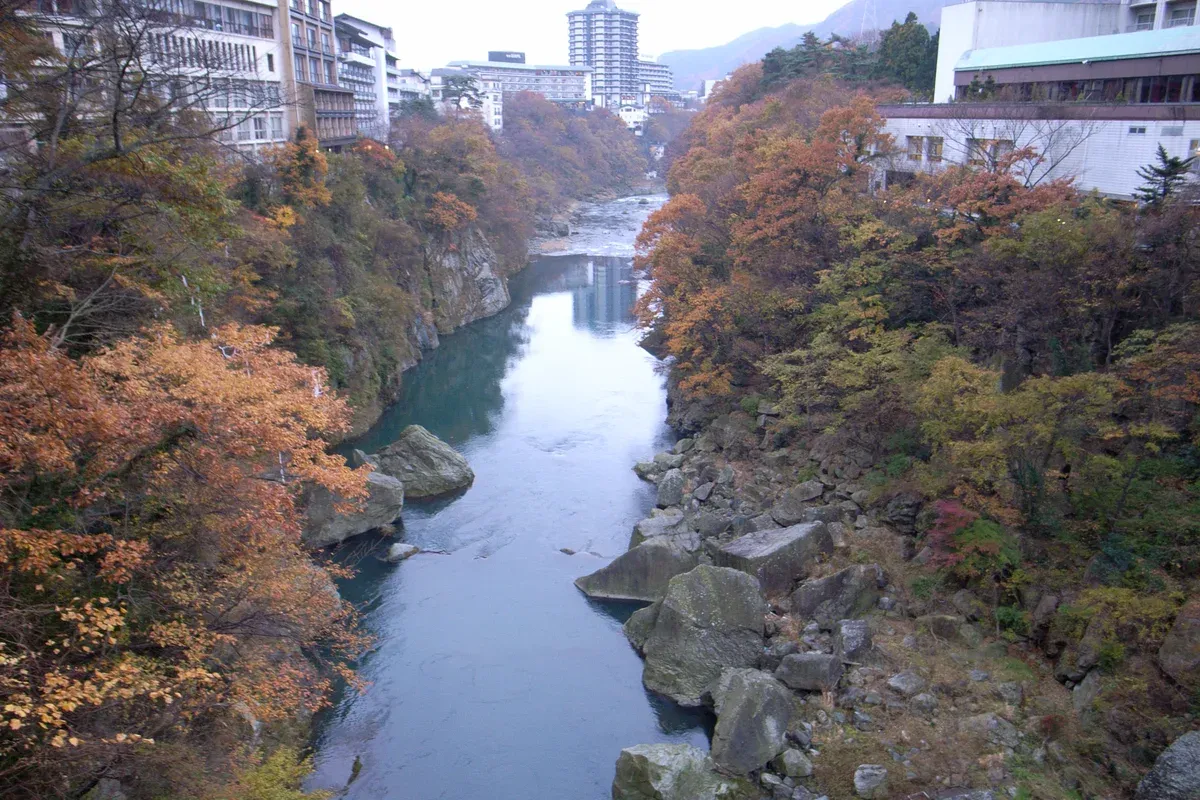
The Kinu River runs through a gorge lined with autumn trees and hotels at Kinugawa Onsen. Photo: w00kie from Tokyo, Japan, CC BY 2.0, via Wikimedia Commons
One Long Day on a Tour, or Two on Your Own
This is the honest trade-off. A one-day tour needs no planning, but the second day on your own buys slower mornings, an onsen night and better light.
What a One-Day Tour Costs and Covers
The Mt Fuji and Hakone day tour with return by bullet train costs $159.54 and runs 11 hours, with the Hakone Ropeway fee, the Lake Ashi cruise fee and a bullet train ticket back to Tokyo Station in the price. Lunch is only included if you select a lunch option, and there is no hotel pickup. The Mt Fuji, Hakone Ropeway, Owakudani and Lake Ashi day tour costs $76 over 10 hours and includes only a one-way ropeway fare, with lunch and the Lake Ashi cruise extra and a possible return after 8 PM. The Nikko Toshogu Shrine and Kegon Waterfall day tour costs $110 for 10.5 hours with the Toshogu ticket in the price and lunch not included.
| Option | Price | Length | Included | Not included |
|---|---|---|---|---|
| Mt Fuji and Hakone by bullet train | $159.54 | 11 hours | Ropeway fee, Lake Ashi cruise fee, bullet train back | Lunch unless selected, hotel pickup, tips |
| Mt Fuji, Hakone Ropeway, Owakudani and Lake Ashi | $76 | 10 hours | One-way ropeway fare | Lunch, Lake Ashi cruise, possible late return |
| Nikko Toshogu Shrine and Kegon Waterfall | $110 | 10.5 hours | Toshogu entry ticket | Lunch, meals |
| 2-day Hakone Freepass | 7,100 yen (8,300 yen with Romancecar) | 2 days | All Hakone loop transport | Hotels, meals, museums |
What the Second Day Buys
A tour compresses Hakone into one coach-sized slice of the day, and you ride the loop on its schedule. Two days on the Freepass let you ride the ropeway at your own pace, soak in an onsen in the evening and see the Open-Air Museum in fresh legs on day two. At Kawaguchiko the second day is worth more than anywhere else, because the mountain shows best early and a day trip simply cannot be there then.
Tours win when time is short or when you do not want to think about timetables at all. Otherwise, for a true 2 day trip from Tokyo, the pass and a hotel night give you the evening and the early morning.
- Book a one-day tour if you have a single day and want zero planning.
- Take two days if an onsen night or an early-morning Mt Fuji view is why you are going.
- Two days cost more in lodging, which is not priced here, but less in rushing.
Where to Sleep on a 2-Day Trip
One night away turns an 11-hour coach day into two slower ones. These are the bases the routes on this page sleep in, each on the train or bus line the route uses.
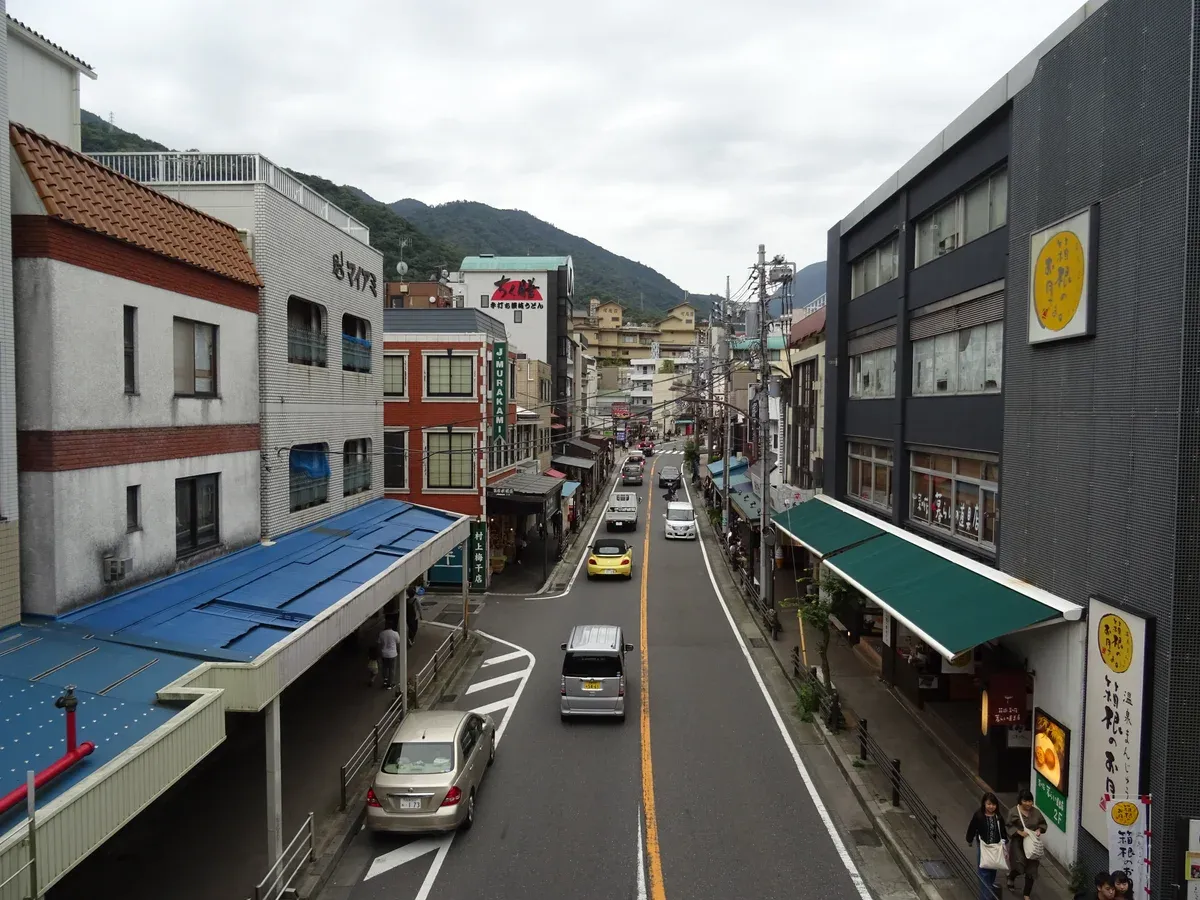
Hakone-Yumoto
- Suits
- Hakone on the 2-day Freepass, with an onsen night
The Romancecar from Shinjuku reaches Hakone-Yumoto in about 80 minutes.
See stays in Hakone-Yumoto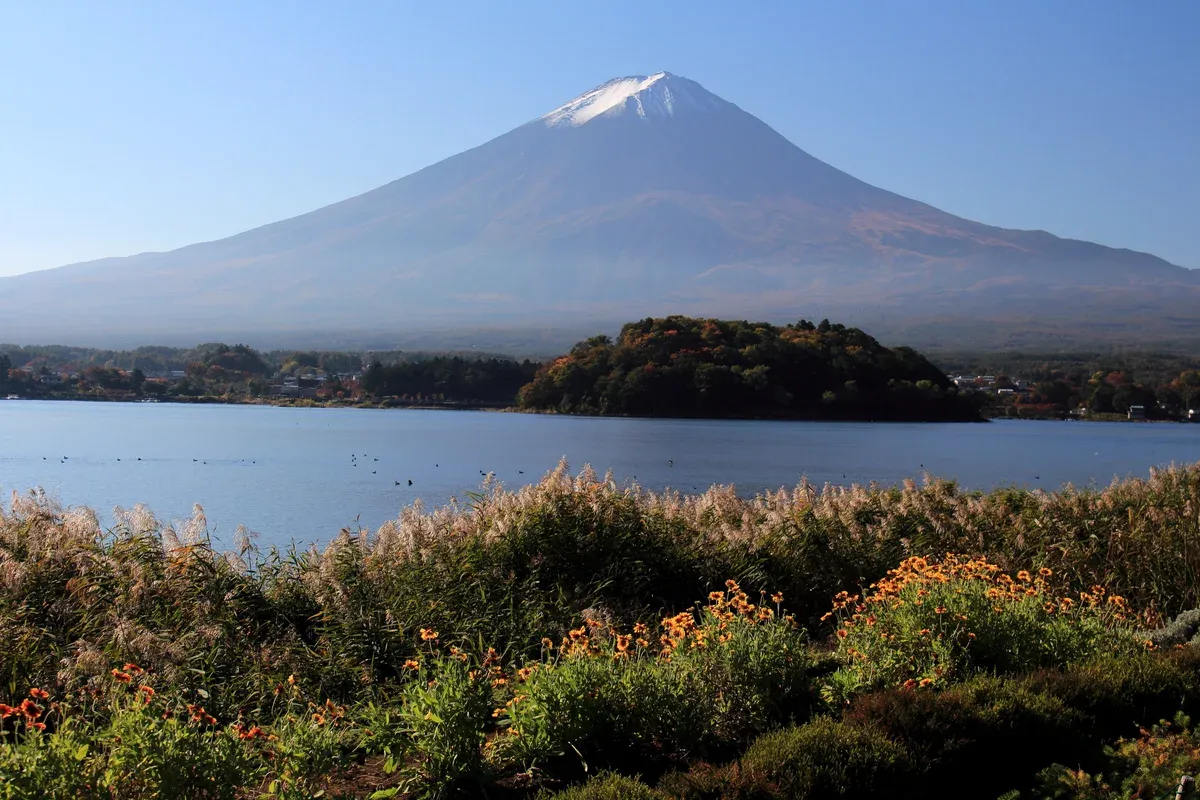
Kawaguchiko
- Suits
- The Fuji Five Lakes with an early morning at the lake
The highway bus from Busta Shinjuku takes about 1 hour 45 minutes.
See stays in KawaguchikoKinugawa Onsen
- Suits
- Nikko on day one, the onsen town on day two
Kinugawa Onsen is about 30 minutes from Nikko by train.
See stays in Kinugawa Onsen2-Day Trips from Tokyo: Questions
What is the best 2 day trip from Tokyo?
Hakone is the easiest because one 2-day Hakone Freepass at 7,100 yen from Shinjuku covers the Tozan train, cable car, ropeway, Lake Ashi cruise and buses, and you sleep in an onsen town halfway through. The full plan is in the Hakone itinerary.
How much does a 2-day Hakone Freepass cost?
It costs 7,100 yen for adults and 1,600 yen for children from Shinjuku for two days, and adding the Romancecar limited express takes the adult total to 8,300 yen. The pass covers the whole Hakone transport loop as described in the route comparison.
What cities are 2 hours away from Tokyo for an overnight trip?
Hakone-Yumoto is about 80 minutes by Romancecar from Shinjuku, Kawaguchiko is about 1 hour 45 minutes by highway bus from Busta Shinjuku, and Tobu-Nikko is about 2 hours from Asakusa. All three work as overnight trips from Tokyo, as the route table shows.
When is Mt Fuji most visible from Kawaguchiko?
Fuji views are better in the early morning or late afternoon, and in the colder winter months than in summer. That is exactly why a night at Kawaguchiko beats a day trip, which the Fuji Five Lakes guide explains.
Is a one-day tour cheaper than two days on your own?
It depends on what you count. The Mt Fuji and Hakone day tour by bullet train costs $159.54 with the ropeway, cruise and bullet train ticket back included, while a 2-day Freepass with Romancecar is 8,300 yen plus a night's lodging. The trade-off is schedule control, which the comparison section sets out honestly.
Can I do Nikko and an onsen in one weekend from Tokyo?
Yes. Ride the Tobu limited express from Asakusa in about 2 hours, see Toshogu on day one, then move to Kinugawa Onsen, about 30 minutes away by train, for the night. The Nikko and Kinugawa guide has the pass and fare details.